
From Nashik to Global Recognition: How Mohammed Dilawar is Reviving House Sparrow Populations
Discover Mohammed Dilawar's journey from Nashik to global conservation hero. Learn how he founded Nature Forever Society
House sparrows, small fuzzy birds recognisable by their distinct chirping and black, brown and white wings, went all but extinct from Delhi’s urban areas around 2012, prompting the then chief minister and avid bird lover Sheila Dikshit to declare it the state bird and initiate a slew of conservation measures.
Eleven years since, sparrows are once again showing themselves to those with patience and keen eyes, fluttering between trees, sitting on ledges and hopping from one windowsill to another.
Despite their growing numbers in the national capital, experts said on Sunday, the eve of World Sparrow Day, that the road to recovery is long and riddled with obstacles endemic to the modern urban landscape.
The State of India’s Birds 2020 (SoIB 2020) report put the house sparrow in the ‘Low Concern’ category, noting that even though its numbers have decreased in large cities, they remain roughly stable overall.
Nature Forest Society’s Mohammed Dilawar, who started the practice of observing March 20 as World Sparrow Day in 2010, noted that human intervention is essential for the conservation of sparrows.
“Sparrows cannot prosper without humans, their nesting and feeding are dependent on humans and their lifestyles. It is also important to understand how everything is connected. Depletion of native plants has led to a decrease in insects which has further removed the first food option for sparrow chicks” Dilawar told PTI.

A combination of these remedies has helped the Bombay Natural History Society (BNHS) and the Delhi government create a Goraiya Gram (Sparrow Village) on the banks of the Yamuna river.
Located inside the Garhi Mandu forest in east Delhi, the pilot project of Goraiya Gram has attracted a number of house sparrows that feed at a special ‘insect hotel’.
“We have created a safe space for sparrows by providing them with the right type of native plants to feed on and nest in. We have also put artificial nest boxes for the sparrows. Moreover, we have created an ‘insect hotel’, a microhabitat for different types of insects that play a very important role in maintaining a healthy population of sparrows,” said Sohail Madan of the BNHS.

The conservation organisation has also grown native grasses like jowar, bajra and munj as well as shrubs like jungli karonda and others that grow small wild berries for the sparrows to feed on. “A lot of locals have taken up the project, basically adopting the area. Earlier there were no sparrows, but now there are a lot of them. There hasn’t been any formal counting so far.
“It is a pilot project for now. If it does well, we will be replicating it in other forest areas,” Madan said. Similar initiatives by people have also started bearing fruit. Nearly eight months after she installed a feeder and a nest box in the balcony of her New Friends Colony house, Nin Taneja was visited by a house sparrow. “It is a long process and there is no looking back. It requires a lot of patience and dedication.
“But once they start coming in, it is a joy to see them,” said the bird enthusiast-cum-painter. “I organise art classes and I meet children who have never seen sparrows. So they become aware of this important part of our ecosystem through my artworks,” she said.
Sparrows, which frequently feature in Taneja’s paintings, are now also frequent visitors to her residential colony in south Delhi, inspiring others to install feeders and nest boxes in their balconies.
(Source: Outlook India)

Discover Mohammed Dilawar's journey from Nashik to global conservation hero. Learn how he founded Nature Forever Society

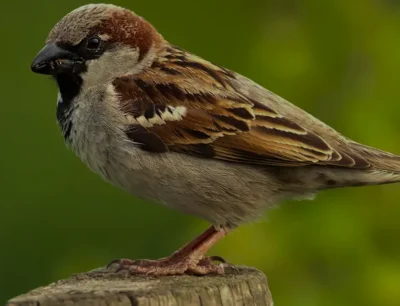
Join the celebration of World Sparrow Day on March 20! Raise awareness about sparrow conservation and their importance i
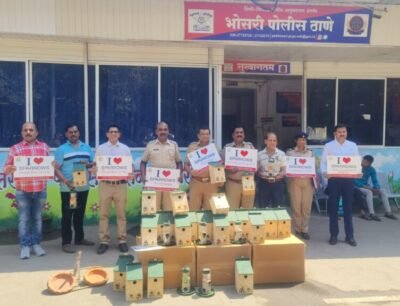
Discover how Pimpri-Chinchwad police stations are championing sparrow conservation on World Sparrow Day. Learn about the